Standing water problems in your yard usually start small: a soggy strip beside the patio, grass that squishes underfoot, or a puddle against the house after an afternoon storm. Leave it, and the same spot floods every storm, the roots stay soaked, and mosquitoes move in.
Winter’s the time to fix it, so if you have standing water in your yard, call Baker Company. We’re not only landscapers; we’re also yard drainage specialists, and we’re happy to help with your drainage problems if this guide isn’t enough.
Where Is the Water Actually Coming From?
Rain, your irrigation, or the tide. Each needs a different fix, and a French drain only handles one of them.
|
Water Source |
What it Looks Like |
What Fixes It |
What Won’t Fix It |
|
Rain and poor grading |
Water runs toward the house or sits in the same low spot |
Grading, surface drains, catch basins, downspout routing |
Adjusting the sprinklers |
|
Irrigation |
One patch stays wet with no rain, near a valve, pipe, or head |
Fixing the leak or resetting zones |
A French drain over an active leak |
|
Tide and storm surge |
Saltwater rises at high tide or in a nor’easter, then drains out |
Nothing in the yard stops it. Grading and salt-tolerant plants help it recover |
Any yard drain |
That last row? It makes a huge difference on the coast. The City of St. Augustine reports 12 to 16 tidal flooding events a year, including flooding in Davis Shores, so you want to plan accordingly. A yard drain can move runoff, but it won’t hold back the Matanzas.
What Drainage Problems Cause Standing Water?
Almost every soggy yard we see comes down to one of these.
- The grade sends water toward the house: Your yard should carry water away from the slab, not park it along the foundation. Regrading gives runoff somewhere to go.
- The sand packed down into a low spot: Our sand lets water straight through in one corner and packs tight enough to hold it in another. Same yard, two problems.
- Downspouts dump roof water in the wrong place: One downspout can flood a bed or side yard every storm. Extending it often fixes what looks like a much bigger problem.
- There’s nowhere for runoff to collect: Fast runoff needs a catch basin or surface drain before it hits the patio, driveway, or house.
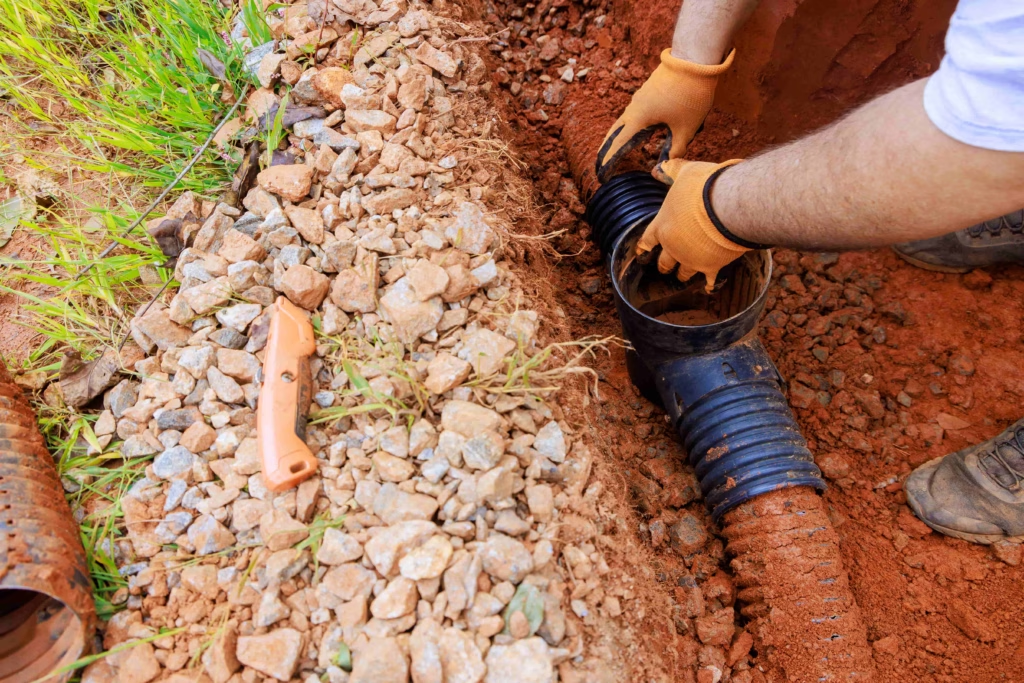
- The French drain is clogged, undersized, or in the wrong spot: French drains move water out of saturated soil through a buried pipe. Install one without checking grade and soil, and the problem stays put.
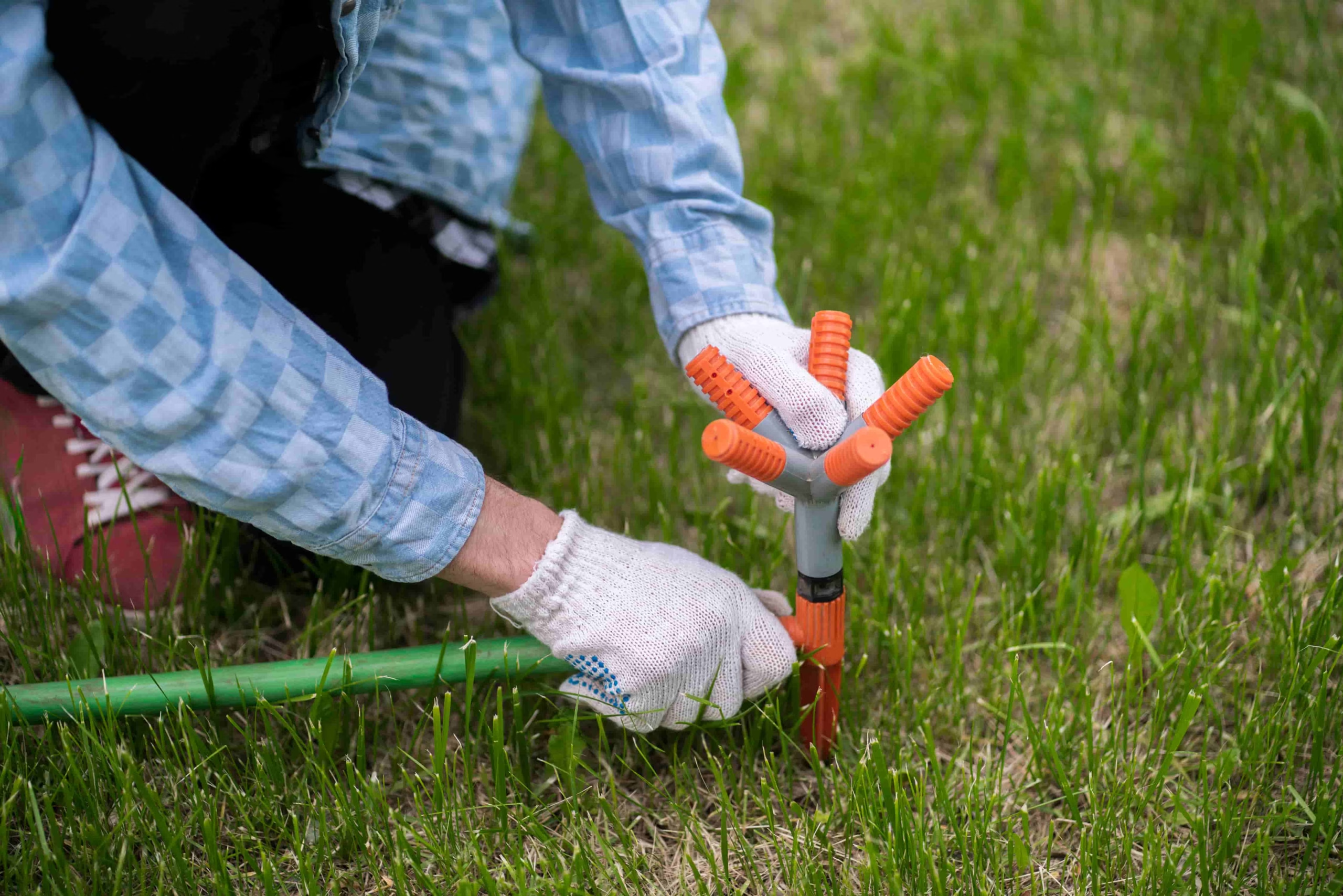
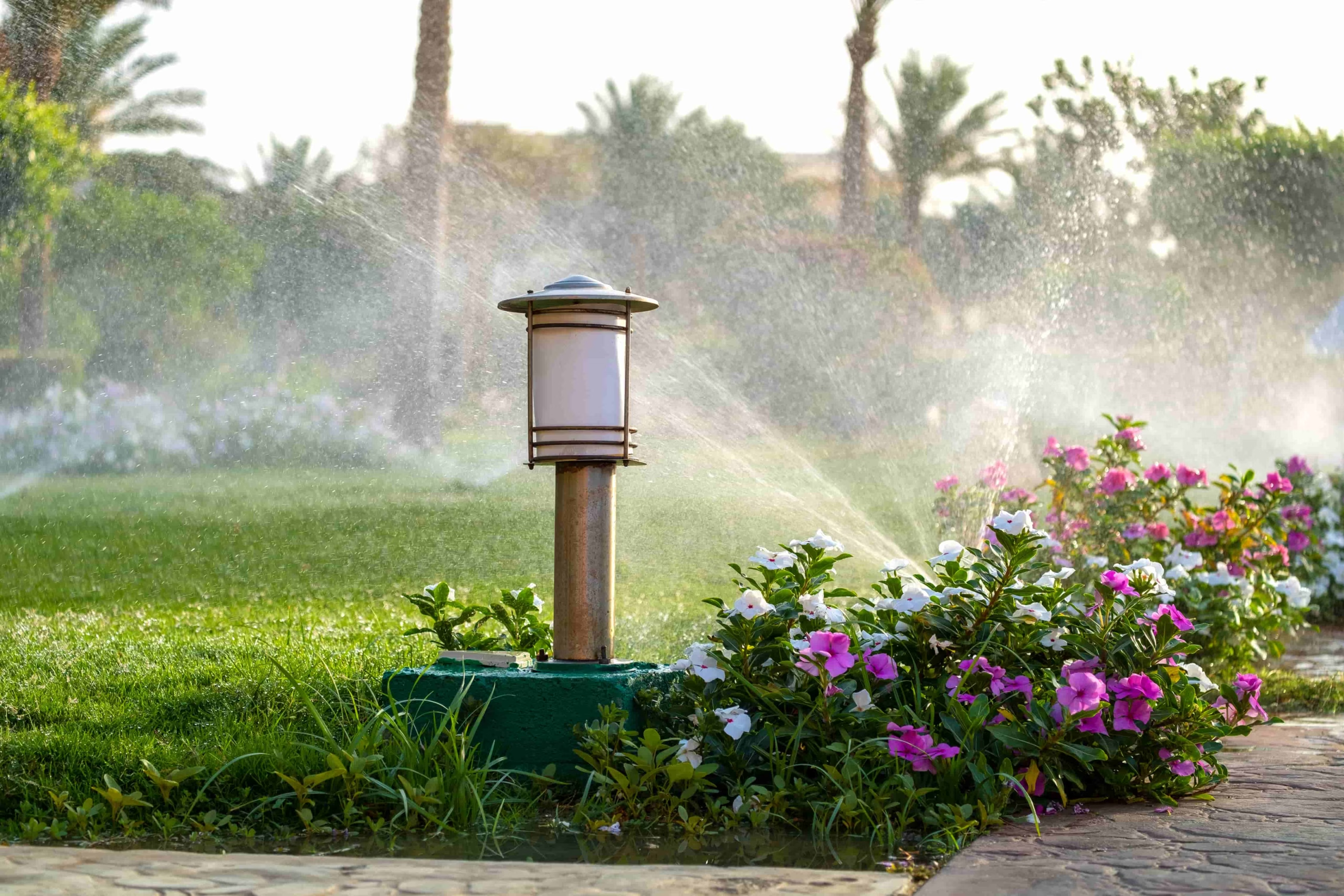
- Irrigation keeps feeding the wet spot: Once the clocks fall back in November, most homes here can only water one day a week. If a spot’s still soggy in December, look for a broken pipe or leaking valve.
- New beds, pavers, or edging are blocking the water’s path: A landscape update can trap runoff nobody notices until the first big storm. That’s why we plan the grading, landscape drainage, and hardscape as one design.
Which Standing Water in Yard Solutions Fit the Problem?
The one that matches the source. Here’s how they line up.
- Regrading: water slopes toward the house or settles low.
- Catch basins or surface drains: stormwater needs somewhere to collect.
- A French drain: saturated soil needs an underground way out.
- Redirected downspouts: roof runoff floods one bed or side yard.
- Irrigation repair: a damaged line or overwatered zone adds the water.
- Replanting: native plants matched to the spot hold soil and use water. Near the beach, that means salt-tolerant saw palmetto or cabbage palm.
What Should You Do Before Winter?
Watch the next rain, then call us while the yard’s dry. Note where water comes in, where it sits, and whether it’s gone in a day or two. If it keeps coming back, fill dirt won’t fix it.
If you’re searching for how to fix standing water in backyard low spots, you need a yard drainage specialist who looks at grade, soil, irrigation, and runoff together. That’s us, Baker.
Schedule a free consultation at (904) 794-7001, and we’ll walk the property and give you a real quote.
FAQ's
How long can water sit in a yard before it’s a problem?
If water is still there 24 to 48 hours after the rain stops, it may point to a drainage problem. If the same spot floods after every storm, it’s worth having it checked.